Equine Welfare
-18.jpg)
Equine Injury in Irish Racing Risk Reduction Programme
-
Pre-race inspections are used by the IHRB, in common with all major racing jurisdictions, as part of our strategy to optimise the safety and welfare of our participants, particularly by adopting any measures possible to reduce the risk of injury.
Horses identified as a particular focus from expert evaluation of Irish racing data for pre-race inspections include,
- horses who were withdrawn on a previous occasion for a veterinary reason;
- those which sustained an injury or veterinary condition last time they ran; and
- those which fall into a number of categories associated with potentially increased risk of injury
-
- identify horses injured in transit. It is in everyone’s interests that these horses are checked and cleared to run, or they run another day.
- identify horses which have a clinical abnormality that may not be an issue in terms of increasing risk of their injury but once identified can be monitored by the IHRB and trainer in conjunction with the trainer’s own veterinary surgeon.
- identify those horses which may not be Suitable to Race.
- identify and examine horses that may be at increased risk of injury based on evidence from data on racing injuries in Ireland (see EIIRRR project) and other jurisdictions.
-
In order to understand as well as possible the health and safety of our equine participants the IHRB Veterinary Team follow up on raceday injuries or horses that show signs of a clinical issue, such as lameness, so as to understand what is causing it and have a greater level of information to make informed decisions on raceday.
The more information that can be provided to the veterinary team via [email protected] about particular horses in advance of raceday should they have an injury or condition, the better informed the team on the day will be and so the more informed any decision they will make about the horse’s Suitability to Race. Without this information, the team will always err on the side of caution if there is any doubt about the horse’s Suitability to Race and not allow the horse to race. -
This programme runs year-round, and on a risk and surveillance basis. A standard format is followed, with the people, premises and processes all reviewed. There is a focus on equine care and safety with horses being identified and inspected, any medicines in use being inspected and assessed and compliance with the Rules of Racing and relevant legislation evaluated. The inspections are always unannounced but with every effort being made to do them at times which make sense, ie. during the working day, unless there is a reason not to. Feedback is given on the day by way of a conversation and a preliminary feedback letter, which is then followed up with a more detailed report. The latter may issue with an Improvement Notice or notice that a matter or matters need to be referred to the IHRB Referrals Committee or Licensing Committee.
Introducing Sleip
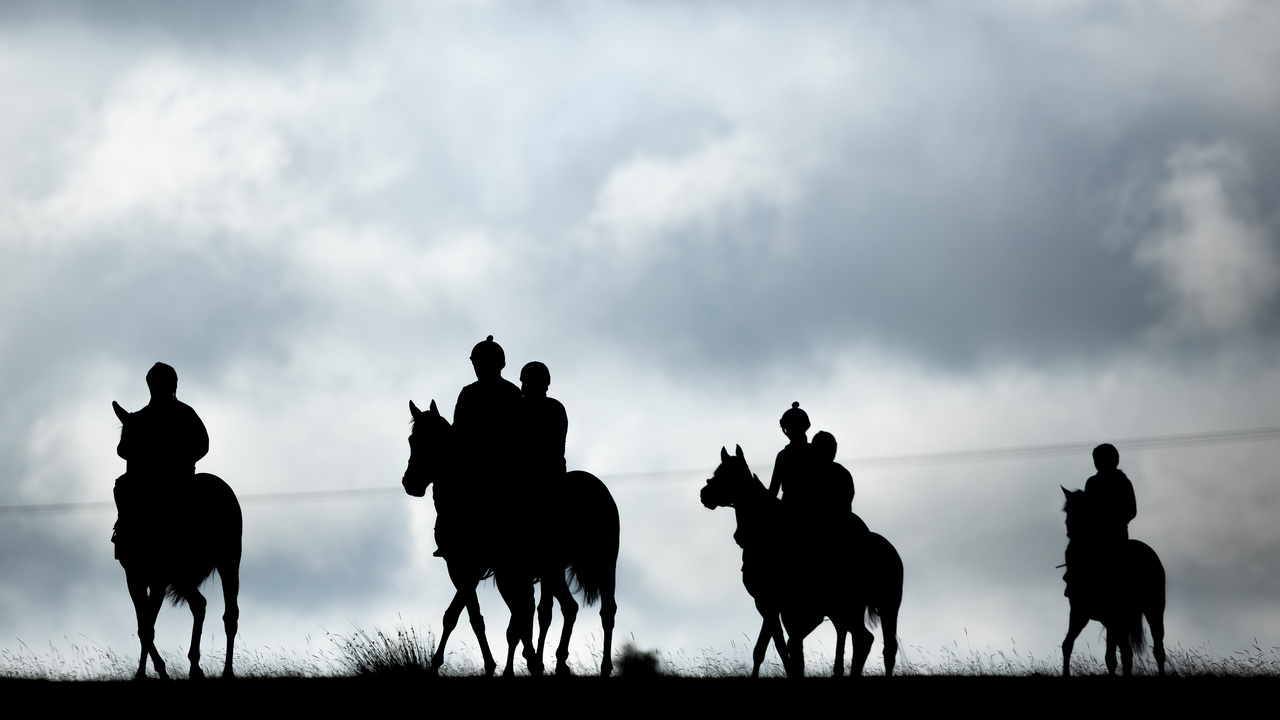
Sleip is an AI-enabled video-based tool that helps measure small differences in how a horse moves during a standard trot-up. It provides additional information to support the Veterinary Officer’s clinical assessment. It does not replace clinical judgement, and it does not make decisions — the Veterinary Officer continues to decide whether a horse is suitable to race.
-
Equine Influenza Virus (EIV) is a constantly evolving virus responsible for periodic outbreaks of Respiratory (airway) disease in horses. We describe horses with the disease as suffering with Equine Influenza (EI), commonly referred to throughout the horse industry as “Equine Flu”. As with Human Flu (Influenza), EI is highly contagious. Although the relevant strain circulating today (the H3N8 strain) was first isolated almost 60 years ago, this strain remains a major threat to horse populations across the globe. The key to the successful long-term persistence of EIV is down to the ability of the virus to constantly mutate. Put simply, these mutations enable the virus to evade the horse’s protective immunity and “gain entry”. You could liken it to the virus always being a step ahead.
-
Horses suffering from clinical infections may show any of or all the following clinical signs:
- High fever
- Cough
- Nasal Discharge
- Lethargy
Disease can be particularly severe in young horses. Affected horses need significant time off work to recover sufficiently. While you should always be guided by your attending Veterinary Surgeon, as a rule of thumb at least a full week of rest is recommended for every day the horse has a fever.
-
All equids (both vaccinated and unvaccinated) are susceptible to Equine Influenza infections. The key point is that vaccinated horses are less likely to succumb to the most severe illness and are less likely to develop clinical infections in general. Furthermore, provided optimal vaccination protocols are adhered to, the risk of vaccinated horses transmitting the virus to other horses is also reduced.
It is worth mentioning that despite the name, dogs can also be infected by EIV. This can be transmitted from dog to dog. EIV poses no risk to human health.
-
Protection against EIV is achieved by strong stimulation of immunity (cellular and humoral) in vaccinated horses. However, despite various updates to the viral strains included within our Equine Influenza vaccines over the years, EIV remains a continual threat. This is partly due to constant evolution of the virus but is also because the protective effects of the vaccine wane over time. As the protective effects of the vaccine decline, this can permit what we call subclinical infections to occur in some horses. Subclinical infections are infections whereby the horse is infected with the virus but is not showing signs of being outwardly ill. Importantly, horses with subclinical infections are still infectious and can transmit the virus to others, especially susceptible populations (unvaccinated or poorly vaccinated horses). When susceptible individuals are exposed to the virus, we begin to see sick horses in the form of clinical cases. EIV outbreaks can seriously disrupt racing and other equine sporting activities for prolonged periods with significant economic impact. Outbreaks associated with severe illness are an obvious concern from a horse welfare point of view.
Of all domesticated animals, the horse travels internationally more than any other species. International travel allows transmission of the virus to and between geographical locations.
-
The recent outbreak of EIV across Europe was considered extensive. Based on the World Organisation for Animal Health (OIE) Report[i], 228 affected premises were confirmed in the UK, 60 in France and 80 here in Ireland. If we consider that these numbers have the potential to reflect an under-estimate, we get an idea of the scale of the outbreak on our small but relatively horse dense Island.
Of interest the outbreaks occurred among both vaccinated and unvaccinated horses, with reduced clinical severity (milder disease) observed in vaccinated horses. The trend of generally milder disease in vaccinated horses was especially true of those horses with a history of appropriate and up-to-date vaccination over several years. This emphasises the importance of inducing a long-lasting immunity in vaccinated horses by using EI vaccines containing EIV strains which match circulating strains[ii].
The observation of disease in vaccinated horses is relatively atypical of previous outbreaks and may be an indicator of possible vaccine breakdown[iii]. This observation led to renewed discussion regarding the crucial importance of vaccine verification, appropriate use, and optimal administration protocols, all with the aim of mitigating future outbreaks.
- OIE Expert Surveillance Panel on Equine Influenza Vaccine Composition. Conclusions and Recommendations, 2021. World Organisation For Animal Health. Available online: https://www.oie.int/en/our-scientific-expertise/specific-information-and-recommendations/equine-influenza/ (accessed on 18th Jan 2022).
- Oladunni, Fatai S., Saheed Oluwasina Oseni, Luis Martinez-Sobrido, and Thomas M. Chambers. "Equine Influenza Virus and Vaccines." Viruses 13, no. 8 (2021): 1657.
- Oladunni, Fatai S., Saheed Oluwasina Oseni, Luis Martinez-Sobrido, and Thomas M. Chambers. "Equine Influenza Virus and Vaccines." Viruses 13, no. 8 (2021): 1657.
-
Vaccination
Adhering to recommended vaccination protocols remains the cornerstone of defence against EIV.
Following the recent European outbreak, the European Horseracing Scientific Liaison Committee (EHSLC) approved changes to the primary course and booster schedule for EI vaccination in racing Thoroughbreds in December 2019. The Irish Horseracing Regulatory Board (IHRB) initially postponed implementation of these changes due to the global Covid-19 pandemic and subsequent challenges the industry was facing as a result. Imminent changes to the vaccination schedule were subsequently announced by the IHRB in 2021 and came into effect as of 1st January 2022. The new vaccination schedule essentially reflects a shortening of all vaccination intervals, including booster vaccination intervals. The rationale behind these changes is to maximise immunity by tightening intervals and thus reduce the waning effects of vaccine induced immunity over time. This should have two beneficial results:- Reduce clinical infection (resulting in illness) in vaccinated horses.
- Reduce subclinical infections in vaccinated horses which while not outwardly ill can act as carriers of the disease, exposing other horses to the virus.
Another key strategy is to reduce the susceptible population of horses. This means not just vaccinating horses in training that need to be compliant to get to the racetrack. The recommended gold standard is to vaccinate all horses on a premises including youngstock, breeding stock, store horses, ponies etc. Herd immunity against EIV requires that at least 70% of the entire equine population are vaccinated. While we have no precise figures, best estimates here and in the UK predict we fall far short of this figure by around 30%.
Other sensible steps include the following:- Isolate new arrivals to your premises.
- If possible, take and record temperatures routinely so you can quickly identify when a horse is running a fever (a temperature that is abnormally high for that horse).
- Do not share tack such as bits and bridles between horses.
- Do not travel or work horses if you have any concerns about their health (fever, lethargy, cough etc.) and seek veterinary advice without delay.
- Isolate sick horses including those with confirmed EIV.
- EIV can spread via droplets released into the atmosphere by infected animals coughing. The recommendation is that infected animals need to be isolated by a 100 m radius to reduce the risk of airborne spread to others. Wind spread is thought to be significant.
- Be aware that EIV can also live on contaminated surfaces, equipment, and clothing.
- Gold standard biosecurity involves using disinfectants, keeping separate sets of equipment, and avoiding cross over of staff between yards, including isolation blocks. While staffing levels and availability may make staff cross over inevitable on all but the most large-scale premises, changing outer clothing between yards or providing overalls for isolation stables are examples of practical compromise.
-
Intervals Prior to 1 January 2022 Intervals effective from 1 January 2022 V1 - V2 21 - 92 days 21 - 60 days V2 - V3 150 - 215 days 120 - 180 days Bootster Not more than 1 year apart Not more than six months apart
Six monthly boosters should be administered no more than six months apart, according to calendar months rather than a fixed number of days. For example, a horse that is fully vaccinated on 1 March 2026 would require a booster on or before 1 September 2026. Examples of potential month end scenarios for consideration are included in the table below:
V3 or booster administered on To consider when calculating six monthly (or less) intervals Booster to be given on or before 31 December No 31 June 30 June 31 January 31 July 28 February 28 August 29 February Leap Year 29 August 31 March No 31 September 30 September 30 April 30 October 31 May No 31 November 30 November 30 June 30 December 31 July 31 January 28 August 28 February 29 - 31 August Non Leap Year, no 29 - 31 February 28 February 29 August Leap Year 29 February 30 - 31 August Leap Year, no 30 - 31 February 29 February 30 September 30 March 31 October No 31 April 30 April 30 November 30 May -
The OIE (World Organisation for Animal Health) Equine Influenza Expert Surveillance Panel publish their recommendations for equine influenza vaccines on a yearly basis and these can be found online at https://oiebulletin.com/.
The current recommendations are as follows:
- It is not necessary to include an H7N7 virus or an H3N8 virus of the Eurasian lineage in vaccines as these viruses have not been detected in the course of many years of surveillance and are therefore presumed not to be circulating.
- Vaccines should contain both clade 1 and clade 2 viruses of the Florida sublineage[iv].
- OIE Expert Surveillance Panel on Equine Influenza Vaccine Composition. Conclusions and Recommendations, 2021. World Organisation For Animal Health. Available online: https://www.oie.int/en/our-scientific-expertise/specific-information-and-recommendations/equine-influenza/ (accessed on 20 January 2022).
-
- As before vaccinations can only be administered and certified by a registered Veterinary Surgeon.
- Under the Rules of Racing a horse cannot run within 7 days of receiving a vaccination (i.e., six clear days must elapse between administration and race day). This is for two reasons:
- The horse’s body needs time to respond to the vaccine by increasing the levels of antibody necessary to provide sufficient immunity against any possible exposure to the disease.
- Some horses, as with people, may get a mild fever after vaccination and the 7-day wait helps to ensure horses do not undertake strenuous exercise too soon after vaccination.
- Vaccine use must be recorded in the horse’s paper passport. Racehorse passports have dedicated pages for veterinary surgeons to enter vaccination details against EI and pages for other equine vaccines. These entries must be written directly into the passport by a veterinary surgeon. Alterations or omissions of batch number, expiry date, practice stamp or signature will invalidate the entry.
- As before, vaccinations must be uploaded to the Weatherbys e-Passport App for pre-clearance ahead of race-day.
- Trainers should note that while the Weatherbys e-Passport App has removed much of the need for checking vaccination compliance on the racecourse, it remains a legal requirement that horses are accompanied by their passports at all times, including during transportation.
-
Yes, to view a copy of the IHRB Code of Practice for Infectious Disease Control in Thoroughbred Racehorses in Training please click here